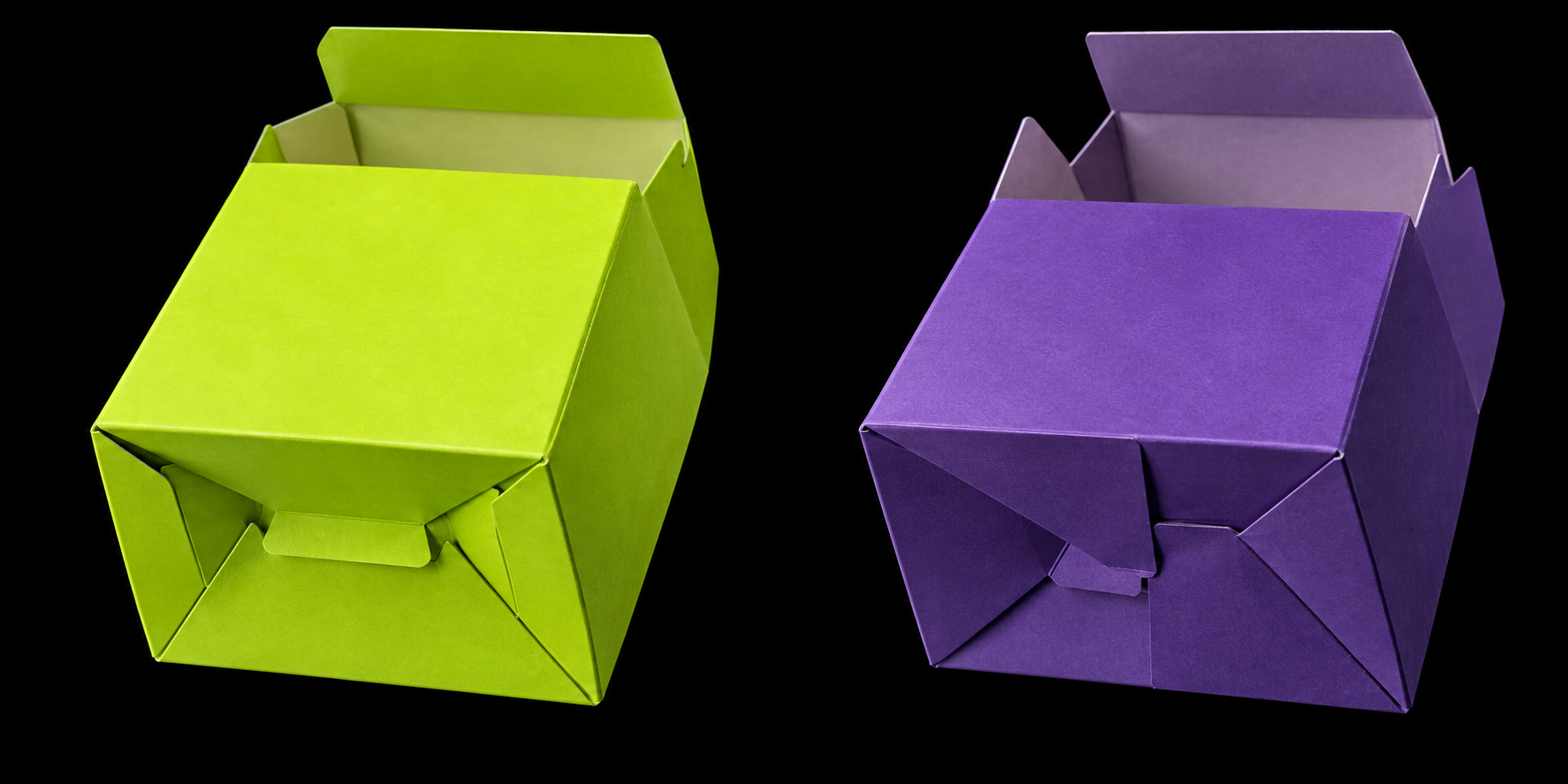
Opposing tuck flaps
Top and base closures fold in opposite directions, distinguishing the format from a straight tuck end carton.
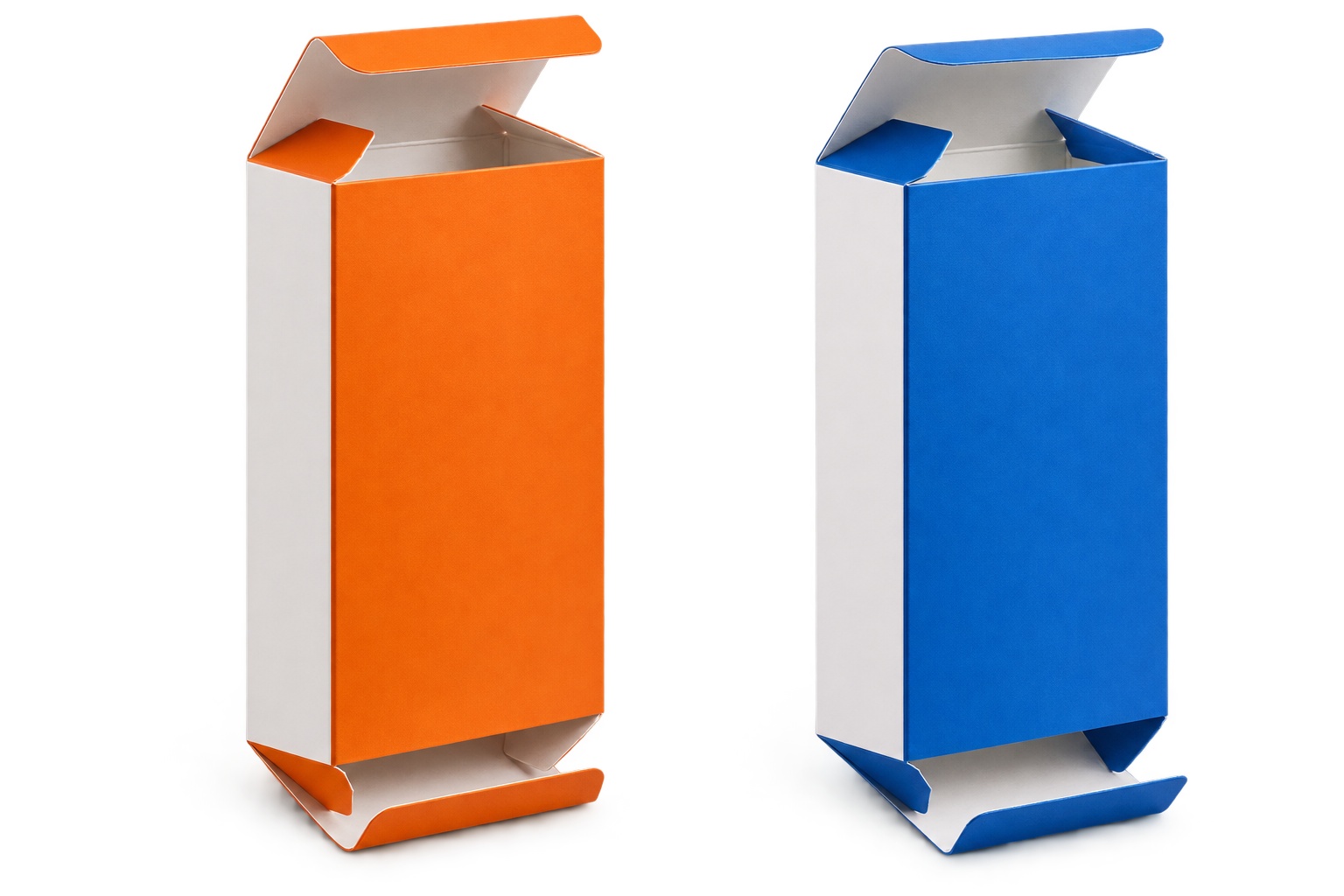
Reverse tuck end cartons use opposing closures to create a familiar retail pack with an efficient dieline. They are a dependable choice for compact branded products where print quality, repeatability and economical board use matter.
A production-efficient folding carton with top and base tuck flaps closing in opposite directions.
Reverse tuck end cartons are produced from one folded and glued paperboard blank. The top and bottom tuck closures are positioned on opposing panels, so they fold in opposite directions. The arrangement can support efficient sheet layouts while retaining the familiar opening, display area and flat-packed supply of a retail folding carton.
Top and base closures fold in opposite directions, distinguishing the format from a straight tuck end carton.
Side dust flaps help guide the closure and reduce open gaps around the packed product.
A compact dieline can make effective use of the printed sheet, depending on size, grain direction and imposed layout.
The box style, board, product and packing process need to work together. These are the advantages to use—and the points to verify before production.
An efficient flat layout can help make good use of the printed sheet.
Clear principal display panels leave room for branding, instructions and compliance copy.
The format is easy to adapt across product sizes and multi-SKU ranges.
Map front, rear and side-panel artwork against the opposing flap orientation before design work begins.
Check whether the product weight is appropriate for a tuck base or requires a locked-bottom alternative.
Confirm which end is packed first and how operators or cartoning equipment will orient the carton.
Protect barcodes, small text and finish registration from panel joins, creases and variable closure pressure.
Beauty, healthcare, supplements and retail. Final suitability is confirmed against the packed product and distribution route.
Stiffness, print response, fold performance and product weight shape the material decision. These are the most relevant starting routes for this structure—not fixed specifications.
Balances stiffness and print quality for beauty, healthcare, wellness and everyday retail cartons.
Provides a bright, smooth surface for precise colour, fine typography and premium graphics.
Supports recycled-content objectives where shade, surface character and performance match the product brief.
Product-specific combinations to evaluate before opening the complete interactive library.
Creates a controlled metallic highlight on logos, borders or product variants.
Contrasts gloss against a matte background and works best on deliberately separated artwork layers.
Introduces depth to logos or motifs while requiring clearance from scores and small type.
A coating or lamination can improve scuff resistance for distribution and repeated handling.
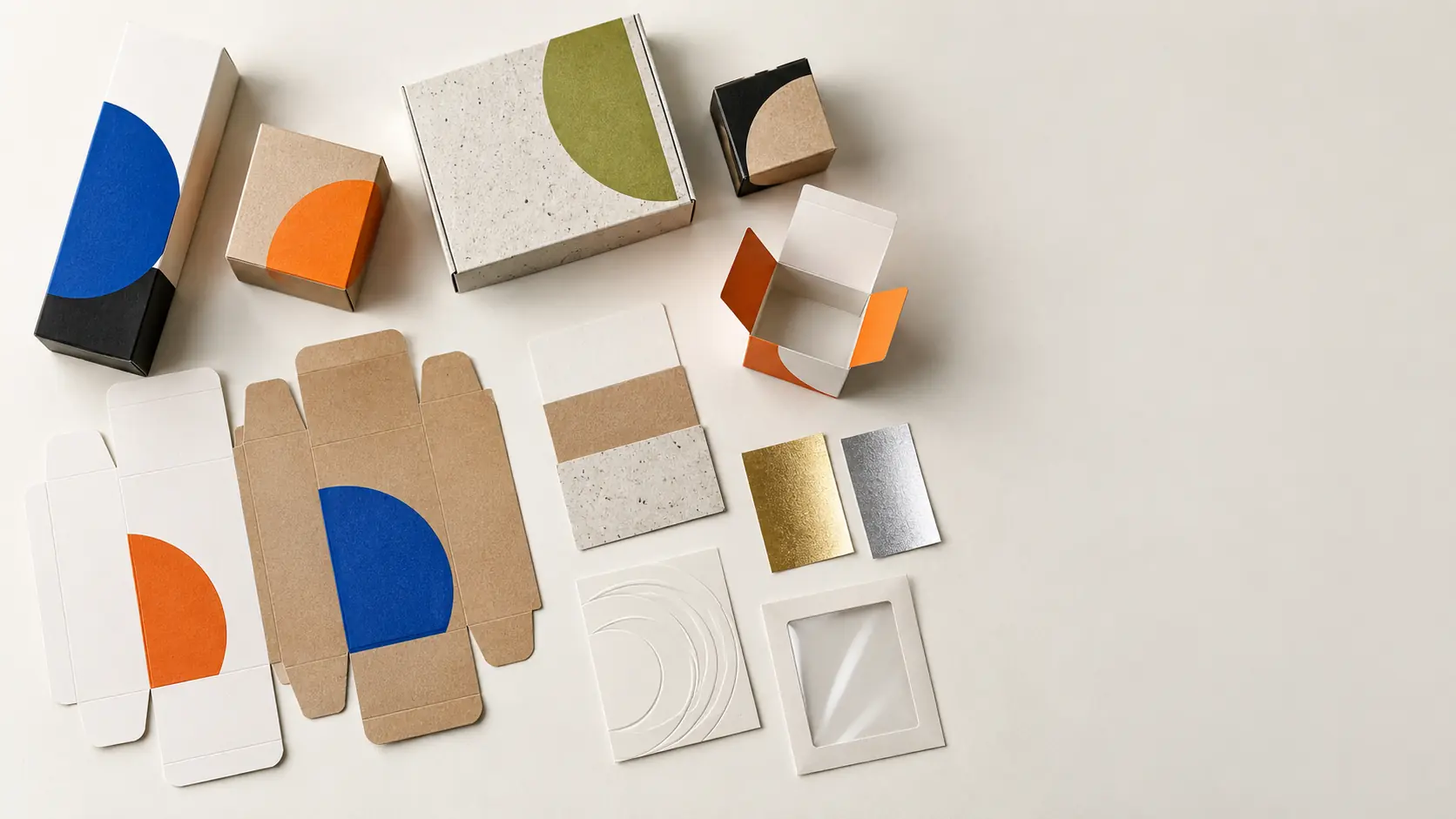
Click through premium finishing and structural add-ons for reverse tuck end cartons. Each option shows the visual character, best use and production point to resolve before artwork approval.
Gold and silver foil are shown separately. Foiling is also available in a wide choice of metallic and pigment colours, subject to the selected foil range and stock.

Warm metallic reflection
A heated die transfers gold-coloured foil onto selected artwork, creating a crisp reflective focal point without printing an additional ink colour.
A screen can suggest colour and surface, but fit, fold and finish should be judged against the actual structure. For a reverse tuck end carton, the approval route can include a plain prototype, printed sample or finish reference.
Confirm the internal dimensions, product movement and the way each panel opens and closes.
Review stiffness, fold response, colour and small copy on the chosen paperboard route.
Check foil, relief, varnish, windows or inserts against the live dieline and tolerance.
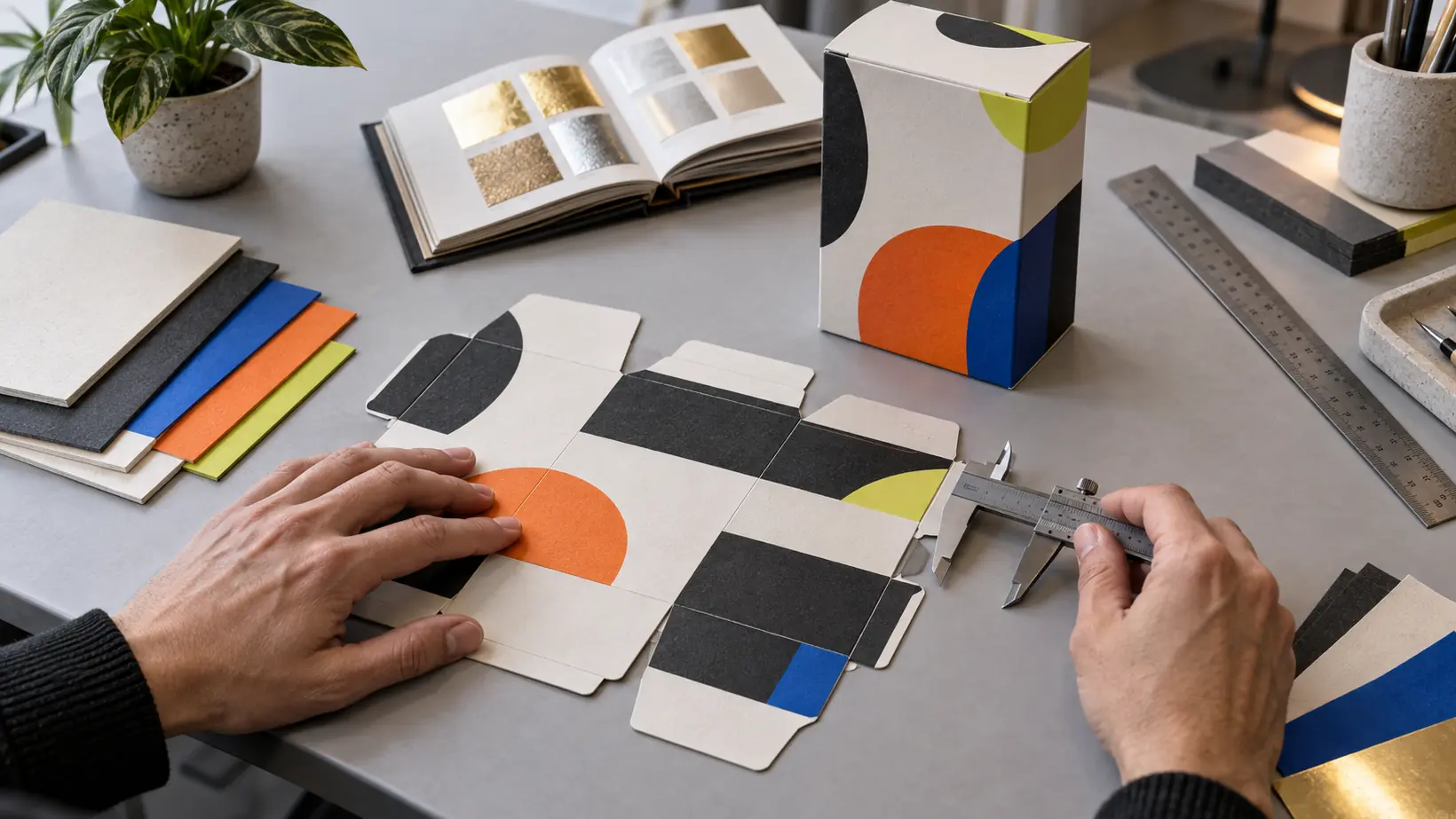
Images are illustrative specification visuals, not client work. The finished result is developed and approved against your product, dieline, board and artwork.
Confirm dimensions, weight, quantity, orientation, packing method and delivery destination.
Select or develop the dieline, board route, closure and any required internal support.
Review fit and opening behaviour with a structural or printed sample where the brief requires it.
Check copy, colour, barcode position and each finishing layer on the approved dieline.
Allow a typical 7–10 working days after the final specification and artwork are approved.
Plan transit separately against packed volume, destination and the required arrival date.
Structure, quantity, timing, print and packing answers for this carton format.
Reverse tuck end cartons use opposing closures to create a familiar retail pack with an efficient dieline. They are a dependable choice for compact branded products where print quality, repeatability and economical board use matter.
Beauty, healthcare, supplements and retail. Final suitability depends on the item dimensions, weight, fragility and the way it will be packed and transported.
Yes. The approved dieline can carry brand colour, product information, barcodes and imagery, with foil, emboss, deboss, spot UV, lamination or windows added where the material and artwork allow.
Yes, where the panel size and carton structure allow. A die-cut aperture can be left open or backed with a clear window patch. Patch material, overlap, glue area, product protection and recycling objectives are confirmed for the specific application.
Gold and silver are the most familiar choices, but hot foil is available in many metallic and pigment colours, including copper, rose gold, red, blue and green, plus selected holographic effects. The final colour and sheen are chosen from physical swatches and remain subject to supplier range and stock.
The minimum order quantity starts at 500 units. Finished size, board, print coverage and finishing requirements are confirmed before the production route is priced.
Typical production lead time is 7–10 working days after the structure, artwork, paperboard and finishes are approved. Structural development, sampling and delivery are additional where required.
The top and base tuck flaps are attached to opposing panels, so one closure folds in the reverse direction of the other.
Not automatically. Its dieline can use the sheet efficiently, but final cost is controlled by finished size, board yield, print coverage, finishing, quantity and packing requirements.
They can be suitable for compatible cartoning lines, but tuck direction, flap geometry, glue seam position and machine tolerances must be checked against the actual equipment before production.
Share the product dimensions and quantity now. Board, structure, finishes and add-ons can be refined during the specification review.